 English
 اردو
اردو
ETunnel Farming in Pakistan – A Smart Solution for Higher Yields, Better Quality and Climate Resilience
Introduction
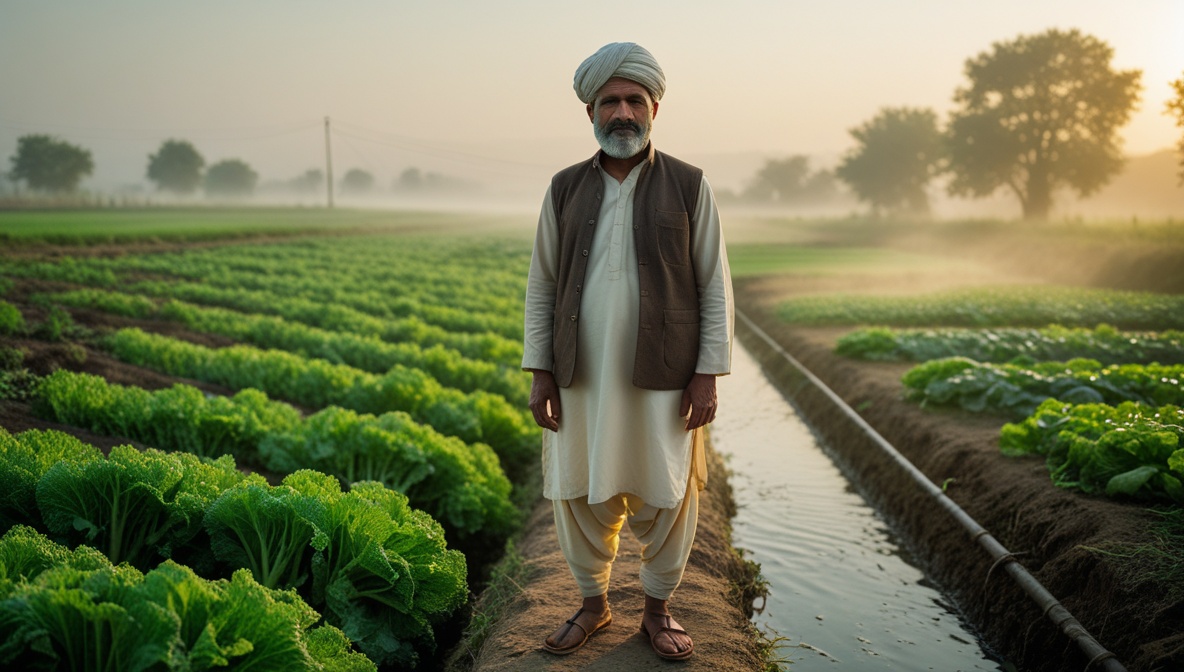
Every sunrise over Pakistan's fields carries a promise.
For millions of farming families, it marks the beginning of another day filled with hard work, hope, and uncertainty. The crops they nurture today will feed their families, supply local markets, and contribute to the nation's food security tomorrow.
Yet farming has become increasingly unpredictable. Rising temperatures, erratic rainfall, water scarcity, pest outbreaks, and increasing production costs are placing unprecedented pressure on agriculture. Climate change is no longer a distant concern—it is a reality that farmers experience every growing season.
To meet these challenges, agriculture must evolve. Across Pakistan, farmers are increasingly adopting protected cultivation, and tunnel farming is emerging as one of the most practical and effective solutions. By creating a controlled growing environment, it enables farmers to produce healthier crops, improve yields, conserve water, reduce production risks, and strengthen farm incomes.
Tunnel farming is more than a cultivation technique. It represents a smarter, more sustainable approach to agriculture that combines traditional farming knowledge with modern innovation.
Why Farming Must Adapt
Agriculture remains the backbone of Pakistan's economy and supports millions of livelihoods. However, traditional farming methods are becoming increasingly vulnerable to changing weather patterns.
Farmers today face numerous challenges, including:
- Rising temperatures
- Irregular rainfall
- Water scarcity
- Strong winds and hailstorms
- Pest infestations
- Plant diseases
- Rising production costs
- Unpredictable market conditions
These challenges make it difficult to achieve consistent yields and stable incomes. Modern agriculture must therefore focus on producing more food while conserving natural resources and reducing climate-related risks.
What is Tunnel Farming?
Tunnel farming is a form of protected agriculture in which crops are grown under structures covered with transparent polyethylene sheets. These tunnels create a controlled microclimate that allows farmers to regulate temperature, humidity, and ventilation while protecting crops from adverse weather conditions.
Tunnel farming helps protect crops from:
- Extreme heat
- Cold weather
- Heavy rainfall
- Hailstorms
- Strong winds
- Dust
- Many insect pests
- Several common plant diseases
By reducing environmental stress, tunnel farming enables crops to mature earlier, extends the growing season, and allows year-round production of many vegetables and fruits in suitable regions.
Choosing the Right Tunnel
Different farming needs require different tunnel systems.
Low Tunnels
Low tunnels are simple structures about two to three feet high, constructed using wire hoops covered with transparent plastic sheets.
They are suitable for:
- Melons
- Watermelons
- Cucumbers
- Early vegetables
Their affordability makes them an excellent starting point for small farmers.
Walk-in Tunnels
Walk-in tunnels are tall enough for farmers to comfortably enter and manage their crops.
These structures are commonly used for:
- Tomatoes
- Capsicum
- Chillies
- Cucumbers
Better ventilation and easier crop management contribute to improved yields and higher-quality produce.
High Tunnels
High tunnels resemble simplified greenhouses and are mainly used for commercial farming.
They are ideal for:
- Commercial vegetable production
- Strawberries
- Exotic vegetables
- Nursery plants
Although they require greater investment, they provide better environmental control and longer production seasons.
Why Tunnel Farming Works
Tunnel farming offers several important advantages for Pakistani agriculture.
Climate Resilience
Protected cultivation reduces crop losses caused by extreme weather and helps farmers maintain more consistent production despite changing climatic conditions.
Water Conservation
When combined with drip irrigation, tunnel farming can reduce water consumption by approximately 30–60 percent, making it particularly valuable in water-scarce regions.
Higher Market Returns
Tunnel-grown vegetables often reach the market earlier than open-field crops. Early and off-season production allows farmers to benefit from premium market prices.
Better Land Utilisation
Tunnel farming can produce significantly higher yields per acre than conventional farming, allowing farmers to maximise returns from limited agricultural land.
Crops Best Suited for Tunnel Farming
Pakistan's diverse climate supports a wide variety of tunnel-grown crops.
Vegetables
- Tomato
- Cucumber
- Capsicum
- Bell Pepper
- Chilli
- Eggplant
- Lettuce
- Spinach
- Coriander
- Cabbage
Fruits
- Strawberry
- Melon
- Watermelon
- Cherry Tomato
- Blueberries (experimental areas)
Herbs
- Mint
- Basil
- Oregano
- Rosemary
- Thyme
Protected cultivation improves crop quality, appearance, shelf life, and market value, making these crops attractive options for commercial growers.
Smarter Farming Through Innovation
Tunnel farming has evolved beyond simple plastic-covered structures.
Modern protected farms increasingly incorporate:
- Drip irrigation systems
- Soil moisture sensors
- Temperature and humidity monitoring
- Automated irrigation controls
- Solar-powered ventilation
- Mobile monitoring and alerts
- Integrated Pest Management (IPM)
These technologies enable farmers to make better decisions while reducing water use, labour costs, and dependence on chemical pesticides.
The Future of Protected Agriculture
One of the most exciting developments in modern agriculture is the integration of tunnel farming with hydroponics.
Hydroponics allows crops to grow without soil by supplying nutrients directly through water.
Its advantages include:
- Up to 90 percent less water use
- Faster plant growth
- Higher yields
- Reduced soil-borne diseases
- Year-round production
For urban and peri-urban areas such as Karachi, Lahore, Islamabad, Faisalabad, and Peshawar, hydroponic tunnel farming offers an efficient and sustainable method of producing fresh vegetables close to consumers.
Growing More and Earning More
Tunnel farming provides significant economic benefits for farmers.
With good management practices:
- Tomato yields may increase by two to four times.
- Cucumber production may increase by two to three times.
- Strawberry quality and productivity can improve significantly.
Tunnel-grown produce generally has:
- Better colour
- Uniform size
- Improved shelf life
- Fewer blemishes
These quality improvements allow farmers to access premium markets and achieve higher returns.
Challenges Can Be Overcome
Like every farming system, tunnel farming requires proper planning, investment, and management.
The initial construction cost may discourage some farmers. However, government support programmes, agricultural financing, and cooperative farming models can help make tunnel farming more accessible.
Successful tunnel farming also requires knowledge of irrigation, ventilation, crop nutrition, and pest management. Training programmes, agricultural extension services, and digital learning platforms can help farmers develop these skills.
In hotter regions of Pakistan, excessive summer temperatures may affect crop performance. Practical solutions include improved ventilation, shade nets, solar-powered exhaust fans, and heat-tolerant crop varieties.
Tunnel Farming and Organic Agriculture
Tunnel farming and organic agriculture complement one another exceptionally well.
Protected cultivation reduces pest pressure, supports biological pest control, improves nutrient management, and enhances crop traceability.
As demand for chemical-free food continues to increase, organically grown tunnel vegetables provide farmers with opportunities to access premium urban markets while supporting environmentally responsible farming.
Getting Started
Farmers interested in tunnel farming should begin with realistic and manageable goals.
Some practical recommendations include:
- Start with a small tunnel and expand gradually.
- Install drip irrigation from the beginning.
- Focus on high-value crops.
- Use certified, disease-resistant seed.
- Monitor temperature and humidity regularly.
- Adopt Integrated Pest Management practices.
- Explore opportunities for organic certification.
- Consider renewable energy solutions such as solar-powered ventilation.
Small improvements made consistently often produce significant long-term benefits.
Looking Ahead
Pakistan's agricultural future will depend on the ability of its farmers to adapt to changing climatic conditions while producing safe, nutritious food for a growing population.
Tunnel farming offers a practical pathway towards climate-smart agriculture by improving productivity, conserving water, reducing production risks, and supporting sustainable farming practices.
The greatest harvest of tunnel farming is not higher yields alone—it is the promise of food security for future generations. By combining innovation with sustainable farming practices, Pakistan can build a more resilient agricultural sector that nourishes both its people and the environment.
Key Takeaways
- Tunnel farming protects crops from extreme weather and many pests.
- It improves yields, crop quality, and farm profitability.
- Combined with drip irrigation, it significantly conserves water.
- Modern technologies such as sensors, solar energy, and hydroponics are making protected farming more efficient.
- Tunnel farming supports climate-smart and organic agriculture.
- Starting with a small tunnel allows farmers to gain experience before expanding.
- Protected cultivation can play an important role in strengthening Pakistan's long-term food security.
Sources & Further Reading
This article has been prepared using information and technical guidance from internationally recognised agricultural organisations and research institutions, including:
- Food and Agriculture Organization of the United Nations (FAO)
- Pakistan Agricultural Research Council (PARC)
- Ayub Agricultural Research Institute (AARI), Faisalabad
- Provincial Agriculture Extension Departments of Pakistan
- International Centre for Agricultural Research in the Dry Areas (ICARDA)
- Published literature on protected cultivation, climate-smart agriculture, hydroponics, drip irrigation, and Integrated Pest Management (IPM).
"This article is part of the Organix Knowledge Series, an initiative to promote sustainable agriculture, environmental stewardship, and practical farming knowledge. Through trusted, easy-to-understand content in English, Urdu, and visual formats, Organix empowers farmers, students, researchers, entrepreneurs, and consumers to build a healthier, greener, and more food-secure Pakistan.."
About Organix
Organix is Pakistan's digital platform promoting organic farming, sustainable agriculture, environmental conservation, and direct connections between growers and consumers. Through its Knowledge Series, Organix aims to make practical agricultural knowledge accessible in English, Urdu, and visual formats for everyone.
"Growing Knowledge. Growing Nature. Growing Pakistan."